Best Tools for Parking Occupancy Monitoring in 2026
Best tools for parking occupancy monitoring in 2026
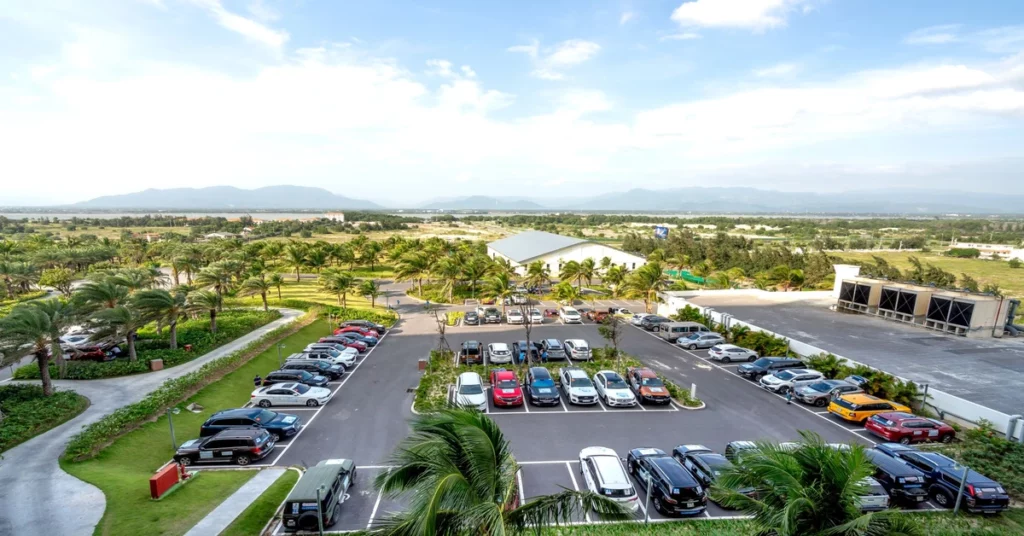
For outdoor parking lots, park-and-ride sites, retail destinations, campuses, ports and marinas, occupancy visibility is now a core operational requirement. Drivers expect to know where spaces are available before they arrive. Facility managers need live data to reduce congestion, improve utilization, support enforcement and make better pricing or staffing decisions.
The best tools for parking occupancy monitoring combine accurate detection, reliable connectivity, clear dashboards and integrations with the systems you already use. In 2026, AI camera-based monitoring has become one of the most practical options for open-air environments because it avoids disruptive ground works while still delivering space-level or zone-level insights.
This guide compares the main technologies available and explains how to choose the right mix for an outdoor parking operation or marina.
What parking occupancy monitoring tools should do
A monitoring tool should do more than count vehicles. It should turn occupancy into decisions. At a minimum, a modern system should provide live availability, historical trends, alerts, reporting and data exports. For larger operators, it should also connect with signage, payment, enforcement, navigation, business intelligence and customer-facing apps.
Accuracy matters because small errors become visible quickly at busy locations. If a facility shows 30 spaces available when only five remain, drivers lose trust and circulation increases. If the system undercounts availability, revenue may be lost. That is why the evaluation should focus on accuracy in real outdoor conditions: rain, shadows, seasonal light changes, snow, glare, vehicle turnover and varying lot layouts.
Comparison of the best tools for parking occupancy monitoring
| Tool type | Best for | Strengths | Watch-outs |
|---|---|---|---|
| AI camera-based occupancy detection | Outdoor lots, marinas, campuses, retail and transport sites | High accuracy, no ground sensors, scalable coverage, visual auditability | Requires good camera placement and privacy-by-design configuration |
| Entry and exit counting | Simple lots with controlled access points | Lower hardware count, useful for total occupancy | Does not identify which spaces are free and can drift without reconciliation |
| In-ground or surface sensors | Small areas where civil works are acceptable | Space-level detection possible | Installation disruption, battery maintenance and weather exposure |
| License plate recognition | Permit, enforcement and access validation | Strong vehicle identification workflow | Not always necessary for occupancy and requires strict privacy controls |
| Mobile payment and reservation data | Paid parking and pre-booked facilities | Useful demand signal and revenue data | Does not detect unpaid, overstaying or non-app users by itself |
| Digital signage and guidance | Driver communication at entrances and decision points | Reduces search traffic and improves experience | Needs accurate live data source behind it |
1. AI camera-based occupancy detection
AI camera systems use computer vision to detect whether spaces or zones are occupied. For outdoor parking lots and marinas, this is often the most balanced approach because one camera can cover multiple spaces depending on layout, height, angle and line of sight. The system can report available spaces in real time without cutting asphalt or installing hardware in every bay.
For facility managers, the biggest advantage is operational flexibility. If the layout changes, camera zones can often be reconfigured in software. If a seasonal overflow area opens, additional camera views can be added. Historical data can show peak periods, dwell times, underused zones and the impact of events or weather.
Parkinto’s AI camera-based parking occupancy detection is designed for outdoor parking lots and marinas, delivering 99.7% accuracy without ground sensors. It is also GDPR compliant, which is essential for European operators and any organization that treats privacy as a procurement requirement.
2. Entry and exit vehicle counting
Entry and exit counting estimates occupancy by counting vehicles as they enter and leave a site. It can be useful where a parking area has a limited number of access roads and the operator only needs total occupancy. Cameras, loops or radar counters may be used for this purpose.
The limitation is that counting systems can drift over time. Missed vehicles, tailgating, service vehicles, temporary closures or unusual traffic movements can create errors. The method also cannot show exactly where spaces are available. For a small outdoor lot, this may be acceptable. For a large campus, retail park, port area or marina with multiple zones, space-level or zone-level detection is usually more actionable.
3. Ground sensors and bay sensors
Ground sensors detect individual space occupancy using magnetometers, radar or similar methods. They can work well in some controlled deployments, but they add installation and maintenance considerations. Outdoor environments expose devices to water, salt, heat, frost, sweeping, resurfacing and heavy vehicle loads.
Battery replacement and sensor failures can become a recurring operational task. Installing sensors may also require closing spaces, drilling, cutting or coordinating civil works. For organizations trying to modernize quickly, these practical constraints often make AI camera monitoring more attractive, especially when the goal is to avoid ground sensors entirely.
4. License plate recognition and enforcement tools
License plate recognition, often called LPR or ANPR, is valuable when the business problem is vehicle identification. Typical use cases include permit validation, overstaying checks, allowlists, customer verification and enforcement workflows. However, LPR is not always the simplest way to measure occupancy.
If your primary question is “how many spaces are free right now?” then occupancy detection may be enough. If you also need to know who is parked, LPR can be integrated with occupancy data under a clear legal basis, retention policy and access-control model. In 2026, responsible operators increasingly separate occupancy analytics from personal data processing wherever possible.
5. Dashboards, alerts and analytics platforms
The best tools for parking occupancy monitoring include a dashboard that is useful for both daily operations and strategic planning. Live views help teams see which zones are filling up. Alerts can warn staff when a lot reaches a threshold, when a marina parking area is near capacity, or when a camera requires attention. Reports help managers justify expansion, adjust pricing, plan staffing and measure service levels.
Look for analytics that show utilization by hour, day, week and season. For mixed-use sites, the ability to compare areas is important. A marina may need different reporting for berth-holder parking, visitor parking and service areas. A retail park may want to understand turnover during peak shopping periods. Raw counts are useful, but trends create value.
6. APIs, signage and customer-facing integrations
Occupancy data becomes more powerful when it is shared. APIs allow live availability to appear on websites, mobile apps, navigation tools, digital signs and internal business intelligence platforms. For outdoor lots, roadside or entrance signage can reduce circulation by directing drivers to areas with available spaces before they start searching.
When comparing vendors, ask how often data updates, what API formats are supported, whether webhooks are available and how uptime is monitored. Also confirm that the system can export historical data for analysis. A parking occupancy platform should not lock valuable operational data inside a closed interface.
How to choose the right tool
Start with the business outcome. If the goal is simply to publish total availability, a counting system may be enough. If the goal is to guide drivers to open spaces, understand utilization by area and support operational decisions, AI camera-based detection is usually stronger. If the goal is enforcement, LPR or permit integrations may be required in addition to occupancy detection.
- Match the tool to the site layout: Open-air lots and marina parking areas benefit from camera plans designed around sightlines, poles, lighting and zones.
- Prioritize accuracy: Ask for evidence of performance in outdoor conditions, not only lab demonstrations.
- Avoid unnecessary civil works: No-ground-sensor systems reduce disruption and simplify expansion.
- Check privacy compliance: Confirm GDPR alignment, data minimization, retention settings and access controls.
- Plan integrations early: Decide whether you need signage, apps, enforcement, payment or BI connections.
- Evaluate total cost of ownership: Include installation, maintenance, connectivity, support and future changes.
Why AI cameras lead the category in 2026
The best tools for parking occupancy monitoring are accurate, scalable and easy to operate. AI cameras meet these requirements for many outdoor facilities because they can cover multiple spaces, adapt to layout changes and provide rich occupancy analytics without putting devices in the pavement. They also support a faster rollout than sensor-heavy projects, especially across multiple sites.
For marinas, this is particularly useful because demand can fluctuate sharply by season, weather, events and berth-holder activity. For outdoor parking operators, it enables better driver information, improved use of existing capacity and stronger reporting for management teams.
Final recommendation
The best tools for parking occupancy monitoring depend on your operational goals, but AI camera-based detection should be at the top of the shortlist for outdoor lots and marinas. It offers the right combination of accuracy, deployment speed, scalability and data value, especially when paired with dashboards, APIs and signage.
If you want 99.7% accurate, GDPR-compliant parking occupancy detection with no ground sensors, talk to Parkinto about monitoring your outdoor parking lot or marina.