Parking Occupancy Detection System for Outdoor Lots
What a Parking Occupancy Detection System Does in 2026
A parking occupancy detection system gives operators a live, reliable view of which spaces are available, occupied, or changing status across an open-air site. For outdoor parking lots and marinas, that visibility can improve customer guidance, reduce manual patrols, support dynamic reporting, and help teams make better operational decisions during peak demand.
In 2026, the most practical systems no longer depend on cutting pavement to install ground sensors in every space. AI camera-based detection can monitor wide outdoor areas from strategic viewpoints, interpret vehicle presence in real time, and share occupancy data with dashboards, signage, mobile apps, and back-office systems. For facility managers, the value is simple: fewer blind spots, faster decisions, and more accurate utilization data without disruptive civil works.
Why Outdoor Operators Need Better Occupancy Data
Outdoor parking environments are dynamic. Weather, shadows, seasonal traffic, large events, delivery activity, boat owners arriving at marinas, and irregular parking behavior can all affect how a site performs. Without accurate occupancy data, managers often rely on spot checks, payment transactions, or customer complaints. Those sources are incomplete because they do not always show where vehicles are, how long spaces remain blocked, or which areas fill first.
A modern parking occupancy detection system helps operators move from reactive management to proactive control. Instead of waiting for congestion at the entrance or complaints about full areas, teams can see utilization patterns as they develop. This is especially valuable for retail parks, business campuses, hospitals with surface parking, municipal lots, park-and-ride sites, airports with outdoor lots, event venues, and marinas with open-air parking zones.
How AI Camera-Based Detection Works
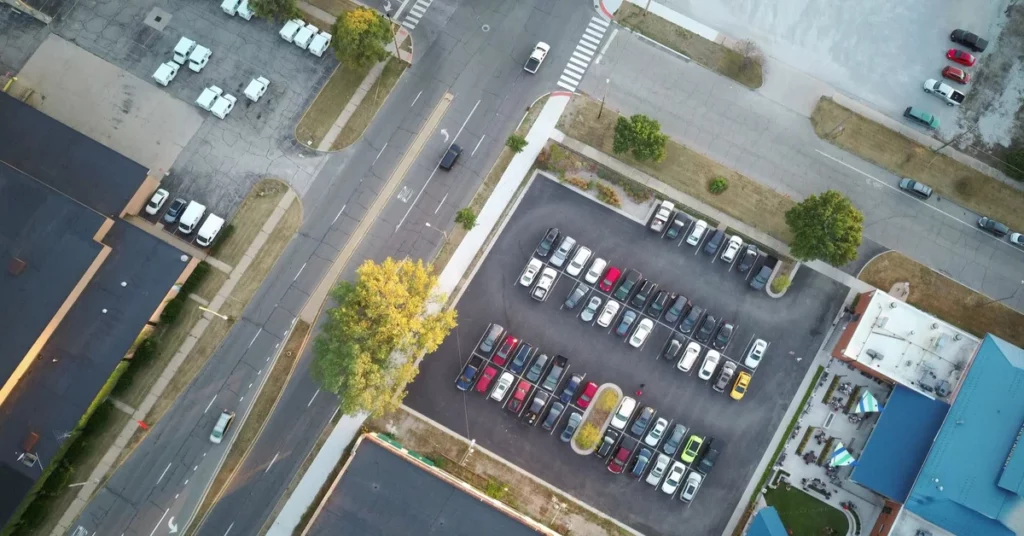
AI camera-based occupancy detection uses video analytics to identify whether marked spaces or defined zones are occupied. Cameras are positioned to view outdoor parking areas, and the AI model interprets occupancy from the visual scene. The system then converts that information into structured data: available spaces, occupied spaces, occupancy percentage, turnover, dwell patterns, and alerts for unusual conditions.
Parkinto is built specifically for outdoor parking lots and marinas. It uses AI camera-based detection with 99.7% accuracy, requires no ground sensors, and is designed with GDPR compliance in mind. Because the approach does not require a sensor in every bay, deployment can be faster and less invasive than traditional space-by-space hardware projects.
Core data outputs facility managers can use
- Live availability: See how many spaces are free across the whole site or in selected zones.
- Zone-level occupancy: Compare utilization between entrances, waterfront areas, staff sections, visitor zones, or permit areas.
- Peak demand reporting: Identify recurring busy periods and plan staffing, signage, or pricing accordingly.
- Operational alerts: Detect when areas reach a chosen occupancy threshold and trigger action.
- Historical analytics: Review long-term trends for investment planning, lease discussions, or capacity studies.
Camera-Based vs. Ground Sensor Parking Detection
Ground sensors have been used for years, but they are not always the best fit for large outdoor sites. They often require installation in or on the parking surface, maintenance at bay level, and replacement over time. For operators managing many outdoor spaces, those costs and disruptions can add up.
By contrast, an AI camera-based parking occupancy detection system can cover many spaces from fewer mounting points. It is easier to scale across open-air areas, and maintenance can often be handled without touching each individual parking bay. The result is a lower-disruption path to high-quality occupancy intelligence.
| Factor | AI camera-based detection | Ground sensor approach |
|---|---|---|
| Installation | Uses cameras with a view of outdoor spaces | Requires hardware at individual spaces |
| Site disruption | No cutting into parking bays for sensors | May require surface works or bay-level installation |
| Scalability | Well suited to large open-air lots and marina parking | Cost and maintenance scale with each space |
| Maintenance | Centralized camera and software management | Distributed hardware across the site |
| Data quality | Real-time occupancy and zone analytics | Depends on sensor condition and coverage |
Benefits for Outdoor Parking Lots
For outdoor parking lot managers, the business case is built around efficiency, customer experience, and asset utilization. When the team knows where capacity exists, they can guide drivers more effectively, reduce unnecessary circulation, and prevent bottlenecks at popular areas. That can improve the first impression for visitors and reduce pressure on frontline staff.
Accurate occupancy data also supports planning. If one section consistently fills before others, operators can adjust wayfinding, reallocate permit groups, introduce reservation rules, or change pricing strategies. If utilization is lower than expected, managers can use reliable evidence before making expansion or redesign decisions. In 2026, data-led parking management is becoming a standard expectation for professional facilities.
Benefits for Marinas and Harbour Parking
Marinas face a distinctive mix of seasonal visitors, berth holders, service vehicles, and event traffic. Parking demand can change quickly when weather improves, charter activity increases, or local waterfront events take place. Manual checks are often too slow to keep up with real-time conditions across open-air marina parking areas.
A parking occupancy detection system helps marina operators understand which zones are available for berth holders, visitors, contractors, or short-stay users. It can support better communication with guests before arrival and give staff a shared operational picture during busy periods. For marinas that want to provide a premium arrival experience, live occupancy information is a practical way to reduce uncertainty and improve service.
GDPR and Privacy Considerations
Any camera-based technology in Europe must be evaluated carefully for privacy and data protection. GDPR compliance is not just a legal checkbox; it affects trust, procurement, signage, retention policies, access controls, and how data is processed. Facility managers should select systems that are designed to detect occupancy rather than identify individuals.
Parkinto is GDPR compliant and focused on parking occupancy analytics. The goal is to provide operational insight about spaces and zones, not to create unnecessary personal data exposure. Buyers should still review their local obligations, document their use case, and ensure appropriate notices and processes are in place for the site.
What to Look for When Choosing a System
Not every parking technology platform is suited to outdoor environments. Open-air sites introduce rain, snow, glare, trees, shadows, vehicle size variation, and changing light throughout the day. A strong vendor should be able to explain how the system handles these conditions and how accuracy is validated.
Key selection criteria
- Accuracy: Look for independently credible performance and real-world outdoor results. Parkinto delivers 99.7% accuracy.
- No ground sensors: Avoid unnecessary pavement disruption and bay-level hardware where camera-based coverage is suitable.
- Outdoor specialization: Choose a platform designed for surface lots, open-air sites, and marinas.
- Integration options: Ensure occupancy data can connect to dashboards, signage, APIs, or existing management tools.
- Privacy by design: Confirm GDPR alignment, access control, and appropriate data handling.
- Scalable deployment: Make sure the system can expand as the facility adds zones or changes its layout.
Implementation Steps for Facility Managers
A successful deployment begins with a practical site assessment. The operator and vendor define the monitored areas, review camera viewpoints, map spaces or zones, and decide what data outputs matter most. For some sites, live occupancy count is the priority. For others, historical utilization, customer guidance, or marina visitor management may be the main objective.
After configuration, the system should be tested against real operating conditions. That includes different times of day, weather conditions, and demand patterns. Training is also important: operations teams need to understand the dashboard, alerts, reporting, and escalation rules. The best results come when occupancy data becomes part of daily decision-making rather than a separate technology project.
The ROI of Better Occupancy Visibility
The return on investment often comes from several areas at once. Staff spend less time manually checking capacity. Customers waste less time searching for spaces. Managers gain evidence for pricing, permits, expansion planning, and service improvements. For high-demand sites, even small improvements in circulation and utilization can have a measurable impact on revenue and satisfaction.
A parking occupancy detection system also improves management confidence. Instead of relying on assumptions, facility leaders can act on accurate, current data. That matters when reporting to owners, municipalities, marina boards, transport authorities, or commercial tenants.
Build a Smarter Outdoor Parking Operation
AI camera-based occupancy detection is now a practical, scalable option for outdoor parking lots and marinas. With high accuracy, no ground sensors, and privacy-conscious design, it gives facility managers the real-time visibility they need to operate more efficiently in 2026.
Related reading: parking space occupancy detection explains the detection layer itself; parking lot occupancy detection takes the lot-level view of counting, guidance and enforcement; and parking detection is the broader introduction for outdoor operators.
If you are evaluating a smarter way to monitor open-air parking availability, Parkinto delivers AI camera-based parking occupancy detection with 99.7% accuracy, no ground sensors, and GDPR compliance. Contact Parkinto to discuss your site and see how live occupancy data can improve operations.