Smart Parking Solutions for Ports: AI Occupancy Data
Smart parking solutions for ports in 2026
Ports are no longer measured only by berth productivity, crane moves or vessel turnaround. In 2026, the quality of landside access is just as important: employees need reliable parking before shifts, ferry passengers need predictable arrivals, cruise guests need clear guidance, marina visitors want convenient spaces, and contractors or service vehicles need to reach the right outdoor areas without circulating through busy access roads.
Smart parking solutions for ports help operators see what is happening across outdoor parking lots, quay-side visitor areas, staff zones, marina parking fields and overflow areas in real time. Instead of relying on manual patrols, ticket counts or static assumptions, port teams can use AI camera-based occupancy detection to understand availability, reduce unnecessary traffic and make better operational decisions throughout the day.
For port authorities, terminal operators and marina managers, the goal is not simply to count cars. The goal is to protect capacity, improve customer experience, support security planning and make better use of valuable waterfront land.
Why parking is a strategic issue for ports
Port environments are complex because multiple user groups arrive at different times and for different reasons. A ferry terminal may experience intense peaks before departures. A cruise port may need to handle passenger drop-off, long-stay guest parking, taxis, coaches and staff vehicles. A commercial port may have shift changes, contractor arrivals, visitor permits and service vehicle staging. A marina may see seasonal weekend peaks, event traffic and longer dwell times during holidays.
When parking occupancy is not visible, small problems can quickly affect the wider site. Drivers circle outdoor lots looking for spaces, queues form near entrances, staff arrive late to operational posts, and security teams spend time answering basic availability questions. In high-traffic waterfront areas, unnecessary vehicle movement can also conflict with pedestrians, cyclists, delivery traffic and operational equipment.
Better occupancy intelligence gives the parking manager, port operations team and customer-facing staff a shared view of demand. It supports decisions such as when to open overflow parking, where to direct arriving visitors, whether staff allocation needs adjustment, and how to communicate availability before peak periods.
How AI camera-based parking detection works outdoors
Modern port parking technology can be deployed without cutting the pavement or installing a sensor in every bay. Parkinto uses AI camera-based parking occupancy detection designed for outdoor parking lots and marina environments. Cameras observe defined parking areas, and AI models interpret whether spaces are occupied or available. The result is real-time occupancy data that can be shown on dashboards, integrated with guidance systems or used for operational reporting.
This approach is especially relevant for ports because outdoor parking areas can be large, irregular, seasonal or spread across several zones. A camera-based system can monitor rows, open-air lots and marina parking areas without the disruption associated with ground sensor installation. There is no need to drill into asphalt, close sections for sensor works or maintain thousands of individual devices embedded in the surface.
Parkinto delivers 99.7% accuracy in parking occupancy detection, helping port operators trust the data they use for daily decision-making. The system is also GDPR compliant, an essential requirement for organizations managing public access, employees and international visitors.
Use cases across port and marina parking areas
Smart parking solutions for ports create value in several outdoor areas, from passenger-facing lots to operational staff zones. The most effective deployments begin with the highest-friction locations, then expand as teams see the benefit of live occupancy data.
Ferry and passenger terminal parking
Ferry terminals often face compressed arrival windows. If drivers do not know where to park, congestion can build quickly near approach roads and terminal entrances. Real-time occupancy data helps staff direct vehicles to available outdoor lots, identify when a zone is nearing capacity and reduce last-minute circulation before boarding.
Cruise port long-stay and drop-off areas
Cruise operations depend on smooth arrival and departure days. Outdoor long-stay parking, short-stay waiting areas and passenger pick-up zones can all be monitored to improve planning. Occupancy insights can help teams prepare for surge periods, coordinate signage and prevent underused areas from being overlooked while busy areas become congested.
Staff and contractor parking
Port employees and contractors are often time-sensitive users. Shift changes, maintenance windows and vessel calls can create intense demand in specific staff lots. AI occupancy data can show whether allocated staff parking is sufficient, whether permits are being used efficiently and whether temporary adjustments are needed during major projects or seasonal peaks.
Marina visitor and berth-holder parking
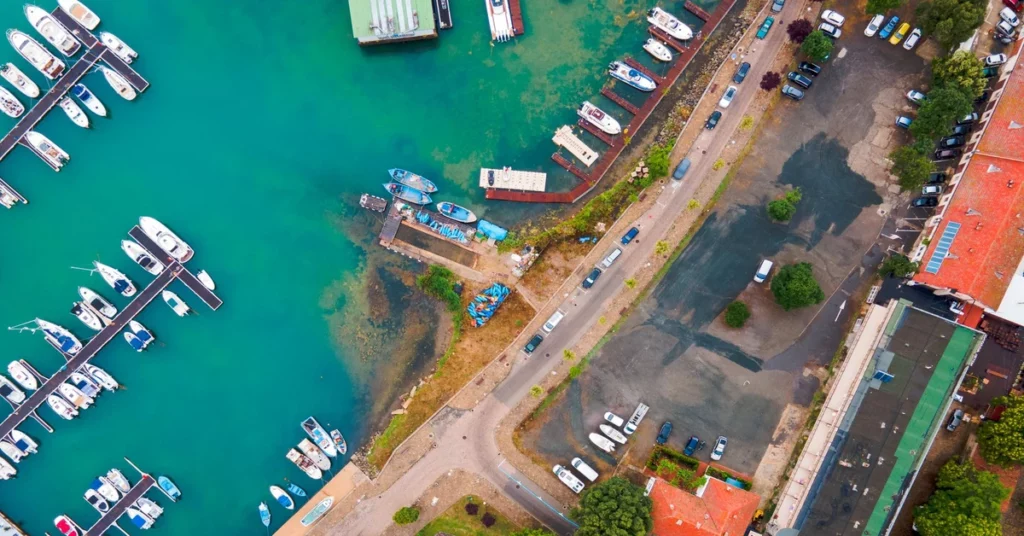
Marinas experience distinctive parking patterns, especially during weekends, regattas, holiday periods and boating events. A camera-based system can monitor open-air marina parking without installing ground hardware near waterfront surfaces. Managers can see occupancy by zone, improve visitor guidance and make informed decisions about event-day staffing.
Key benefits for port parking managers
The strongest business case for port parking intelligence comes from operational efficiency, customer experience and asset utilization. When accurate data replaces guesswork, teams can respond faster and plan with more confidence.
- Reduced circulation: Direct drivers to available outdoor spaces faster and limit unnecessary vehicle movement inside the port estate.
- Better peak management: Identify when passenger, staff or marina lots are approaching capacity before queues become visible.
- Improved use of existing land: Understand which parking zones are underused, overused or affected by time-of-day demand patterns.
- Lower installation disruption: Avoid ground sensors and the civil works associated with bay-by-bay hardware installation.
- Actionable reporting: Use occupancy trends to support staffing, pricing, permit allocation, expansion planning and stakeholder reporting.
- GDPR compliant operation: Deploy occupancy detection with privacy-aware processes suitable for public and employee parking environments.
Comparison: camera-based detection vs. ground sensors
Port sites often need technology that can adapt to changing layouts, temporary lots and seasonal operations. The table below compares common approaches for outdoor port parking occupancy detection.
| Factor | AI camera-based detection | Ground sensor approach |
|---|---|---|
| Installation | Uses cameras to monitor defined outdoor areas with limited disruption | Requires hardware installed in individual spaces or pavement areas |
| Scalability | Well suited to large lots, irregular layouts and marina parking zones | Can become complex and costly across large or changing sites |
| Maintenance | Fewer physical devices exposed to surface wear | Many individual sensor units may require battery or hardware maintenance |
| Operational flexibility | Zones can be reconfigured as outdoor layouts change | Changes may require moving or reinstalling hardware |
| Data value | Provides live occupancy insights and trend reporting | Provides bay or zone status depending on deployment design |
What to evaluate before deploying smart port parking
Before selecting technology, port teams should define the operational questions they want the system to answer. For example: Which outdoor lots reach capacity first? How early do ferry passengers arrive? Are staff spaces being used as intended? Do marina visitors struggle most on weekends or during events? Which overflow areas should be opened first?
Smart parking solutions for ports should also fit the realities of the site. Outdoor lighting conditions, camera mounting locations, seasonal weather, line of sight, signage, traffic routing and privacy requirements all matter. A strong implementation plan maps parking zones clearly, defines performance targets, and aligns the data output with the teams that will use it: parking operations, security, customer service, facilities, commercial management and senior leadership.
Integration is another important consideration. Occupancy data can feed internal dashboards, customer information channels, variable message signs, mobile apps or planning reports. Some operators may start with a management dashboard and later expand into driver-facing guidance once occupancy patterns are validated.
Data-driven planning for future port growth
Many ports face pressure to serve more passengers, more marine activity and more commercial users without unlimited land for parking expansion. Reliable occupancy history is therefore valuable for capital planning. Instead of basing investment decisions on complaints or peak-day observations, managers can analyze actual utilization by zone, date, time and season.
This evidence helps determine whether a parking shortage is constant, seasonal or limited to specific events. It can also reveal where policy changes may solve the problem before new land is allocated. For example, a port may find that staff parking demand peaks at shift overlap, while visitor parking remains available elsewhere. A marina may discover that certain areas are underused because signage or pedestrian routes make them less visible. These insights support smarter operational changes before expensive construction is considered.
Privacy and compliance in public port environments
Ports handle diverse users, including employees, local residents, tourists, berth holders and international passengers. Any parking technology must therefore be designed with privacy and compliance in mind. Parkinto is GDPR compliant and focuses on occupancy detection rather than creating unnecessary personal data processes. For parking managers, this supports responsible deployment while still delivering the live information needed to operate outdoor parking efficiently.
Clear governance remains important. Operators should define who can access dashboards, how reports are used, and how the system supports legitimate operational purposes. With the right controls, parking occupancy technology can improve site performance while respecting user privacy.
Building a practical rollout roadmap
A successful project does not need to monitor every space on day one. Many operators start with a high-impact outdoor lot such as a ferry terminal car park, marina visitor area or staff parking zone. After validating accuracy, reporting and operational workflows, they can extend coverage to overflow lots, long-stay passenger areas and additional marina zones.
Smart parking solutions for ports work best when paired with clear operational actions. If a lot reaches 90% occupancy, who receives the alert? Should staff open overflow parking, update signage or redirect arrivals? Which reports should be reviewed weekly? Defining these actions ensures that occupancy data becomes part of everyday decision-making, not just another dashboard.
The future of port parking is visible, accurate and adaptive
Port parking will continue to become more data-driven as passenger expectations rise and waterfront land becomes more valuable. The ability to see outdoor occupancy in real time gives operators a practical advantage: fewer surprises, better communication and stronger control over peak demand. In a setting where access, safety and customer experience are closely linked, parking intelligence is a core operational tool.
Ports running boat berths alongside their car parks can cover both from one system: Parkinto Marina adds camera-based berth occupancy, autonomous check-in and billing for berth stays on top of landside parking detection.
For the software side — selection criteria, seasonal planning and rollout — see our guide to parking management software for marinas.
For port authorities, ferry terminals, cruise facilities and marina operators, smart parking solutions for ports offer a direct path to better visibility without ground sensors. Parkinto combines AI camera-based detection, 99.7% accuracy and GDPR compliant operation for outdoor parking lots and marinas. To explore how Parkinto can support your site, visit Parkinto and request a short consultation.