Parking Space Occupancy Detection: AI Guide for Operators
What parking space occupancy detection means in 2026
For parking facility managers, parking space occupancy detection is no longer just a count at the gate. It is a real-time operating layer that shows which individual spaces are free, occupied, blocked, reserved, or unavailable across a car park. In 2026, the most effective systems use AI cameras and computer vision to monitor occupancy without cutting pavement, installing in-ground sensors, or sending staff to perform manual counts.
The business case is clear: drivers want predictable parking, operators need better utilization, and property owners expect measurable returns from every square metre of parking. When occupancy data is accurate and available in real time, facilities can guide drivers faster, reduce congestion at peak periods, improve compliance, and make better decisions about pricing, staffing, maintenance, and tenant allocation.
Why traditional counting methods fall short
Many car parks still rely on entrance and exit loop counts, handheld patrols, or ground sensors installed in each bay. These methods can provide useful information, but they often miss the operational detail managers need. A gate count can tell you that 420 vehicles entered and 390 left, but it cannot reliably show whether level 3 is full, whether accessible spaces are occupied, or whether a reserved zone is being misused. Manual checks are slow and inconsistent, especially during events or commuter peaks.
Ground sensors can identify whether a vehicle is above a particular device, but installation can be disruptive. They typically require drilling, bay-by-bay deployment, battery management, network planning, and periodic maintenance. For multi-storey car parks, airports, hospitals, universities, retail destinations, and office campuses, that can create avoidable downtime and high lifetime cost.
How parking space occupancy detection works with AI cameras
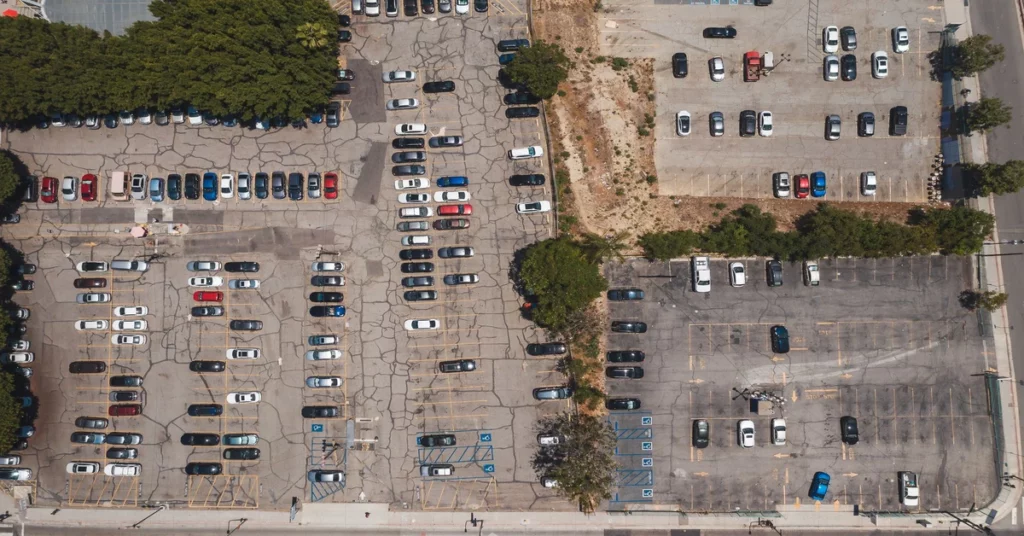
Modern parking space occupancy detection uses strategically placed cameras to view rows, decks, entrances, exits, or open-air parking areas. AI models identify parking bays and determine whether each bay is occupied. The system converts visual information into structured occupancy data, such as available spaces by zone, dwell time, turnover, and exceptions. Facility teams can then view dashboards, feed data to digital signs, connect to parking apps, or integrate occupancy events into operational systems.
Parkinto is built for this AI camera-based approach. It delivers 99.7% accuracy, requires no ground sensors, and is designed to support GDPR-compliant deployments. Because the intelligence comes from cameras and software rather than devices embedded in every space, operators can scale coverage faster and avoid many of the civil works associated with older sensor-based projects.
Key benefits for parking facility managers
1. Real-time visibility by level, zone, and space
Space-level visibility helps managers move from reactive operations to proactive control. Instead of waiting for complaints or sending staff to check a full level, teams can see occupancy patterns as they happen. This is especially valuable in facilities with mixed-use allocations, such as monthly permit holders, short-stay visitors, EV charging bays, accessible spaces, staff zones, loading areas, and premium spaces.
2. Better driver guidance and reduced search time
Drivers who circle for a space create congestion, emissions, frustration, and safety risks. Accurate occupancy data can be sent to entrance displays, level indicators, mobile apps, or wayfinding systems so drivers are directed to available areas sooner. Even small reductions in search time can improve the customer experience and support higher repeat usage in retail, healthcare, airport, and event environments.
3. Higher utilization of existing assets
Before investing in new construction or overflow lots, operators need to know how their current capacity is actually used. Occupancy analytics reveal underused zones, peak demand windows, and recurring bottlenecks. With reliable data, managers can adjust allocations, rebalance permits, optimize EV bay placement, introduce dynamic pricing, or redesign signage based on observed demand rather than assumptions.
4. Lower installation disruption
Camera-based deployment avoids the need to install a device in every bay. That can reduce disruption for operating facilities, particularly where closing floors or drilling surfaces is costly. It also simplifies maintenance because there are fewer physical components exposed to vehicles, snow removal equipment, water ingress, or battery depletion.
5. Stronger compliance and reporting
Parking teams increasingly need to report on utilization, accessibility, sustainability, tenant service levels, and asset performance. A reliable occupancy platform provides auditable data that can support internal reporting, SLA reviews, investor conversations, and operational planning. It can also help identify misuse of restricted areas or long-stay vehicles in short-stay zones.
Comparison: AI cameras vs. ground sensors
| Criteria | AI camera-based system | Ground sensor approach |
|---|---|---|
| Installation | Uses cameras positioned to cover multiple bays or zones | Typically requires a device installed in each bay |
| Disruption | Minimal civil works and faster rollout in many sites | May require drilling, closures, and surface work |
| Maintenance | Centralized hardware and software monitoring | Bay-level battery and device maintenance |
| Data detail | Space, row, zone, and visual context depending on design | Occupancy status at sensor location |
| Scalability | Efficient for multi-level and large facilities | Costs scale with every individual bay |
Privacy and GDPR considerations
Any camera-based parking technology should be designed with privacy in mind from the start. GDPR requires clear purpose limitation, data minimization, appropriate security, and a lawful basis for processing personal data where applicable. For operators, this means choosing a solution that focuses on occupancy outcomes rather than unnecessary personal identification.
Parkinto supports GDPR-compliant parking deployments by providing AI camera-based occupancy intelligence without ground sensors. The operational goal is to detect whether spaces are available, not to create unnecessary driver profiles. Facility managers should also ensure appropriate signage, internal access controls, retention policies, vendor documentation, and data processing agreements are in place for their jurisdiction and use case.
Where occupancy detection creates the most value
- Airports: Improve guidance across long-stay, short-stay, valet, and premium parking products.
- Hospitals: Help patients, visitors, and staff find available spaces during stressful peak periods.
- Retail and mixed-use sites: Increase convenience and understand demand by entrance, tenant cluster, or time of day.
- Universities: Manage permit zones, event parking, visitor lots, and staff allocations with better data.
- Corporate campuses: Measure hybrid work patterns and right-size employee, visitor, and EV parking.
- Municipal facilities: Improve downtown access, enforcement planning, and public parking transparency.
Data that should be on every manager’s dashboard
A strong parking space occupancy detection platform should do more than show a green or red space. Managers need both live visibility and historical intelligence. The most useful dashboard metrics include live occupancy by zone, total available spaces, peak occupancy, turnover rate, average dwell time, overstays, blocked bays, EV charger occupancy, occupancy by permit type, and trend comparisons by day, week, month, and season.
These insights help answer practical questions: Do visitor bays fill before staff bays? Are EV chargers occupied by vehicles that are no longer charging? Which floor is avoided because wayfinding is poor? Does an event schedule require temporary reallocation? Accurate data turns these questions into operating decisions.
Implementation checklist for a successful project
- Define the objective: Decide whether the priority is driver guidance, utilization analytics, enforcement support, revenue optimization, or all of these.
- Map the facility: Document levels, zones, bay types, lighting conditions, entrances, exits, and signage locations.
- Plan camera coverage: Position cameras to maximize space visibility while respecting privacy and operational constraints.
- Set accuracy expectations: Validate performance during peak times, night conditions, weather changes, and unusual vehicle positions.
- Integrate outputs: Connect occupancy data to dashboards, signs, mobile apps, APIs, or parking management systems.
- Train the team: Ensure operations, security, customer service, and maintenance teams know how to use the data.
Choosing the right parking space occupancy detection partner
The best partner should combine computer vision expertise with a practical understanding of parking operations. Look for proven accuracy, flexible camera deployment, clear privacy documentation, open integration options, responsive support, and reporting tools that match the way your team manages the facility. Ask how the system handles occlusion, lighting variation, snow, shadows, cleaning schedules, temporary closures, and mixed vehicle types.
Parking space occupancy detection is most valuable when it becomes part of daily management, not just a technology installation. With accurate live data and useful analytics, parking operators can improve the driver experience, reduce operational waste, and make smarter long-term asset decisions.
Looking at this as a complete deployment — architecture, ROI and implementation steps for outdoor sites? Read our guide to choosing a parking occupancy detection system.
Before signing anything, it is worth knowing where detection struggles: our field guide to parking space detection failure modes lists the site conditions that break naive systems and how to test for them.
Ready to modernize occupancy monitoring without ground sensors? Talk to Parkinto about AI camera-based detection for your parking facility.